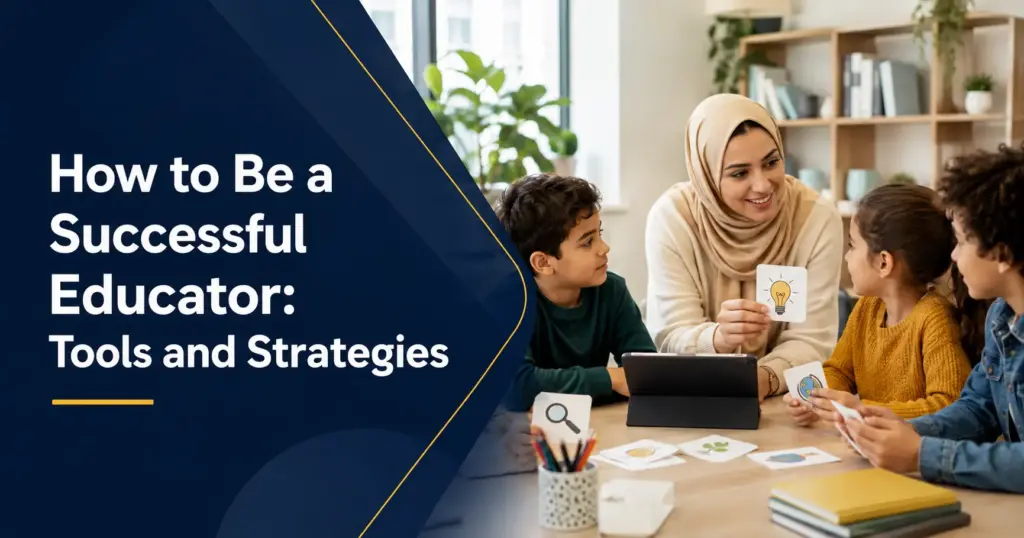
Who Is a Successful Educator?
A successful educator is what everyone strives for. As problems increase and people face different paths in life, societies look for successful educators who can guide them toward the right direction.
There is no doubt about the educator’s important role in the educational process. The educator is responsible for managing the different elements of the learning and development environment. They communicate with children and provide them with feedback about the world and life as a whole.
An educator carries the responsibility of education and plays an important role in passing valued knowledge and culture from one generation to another. However, some educators make the mistake of trying to create carbon copies of themselves without taking into account individual differences, uniqueness, and diversity among children.
This leads us to some important questions:
What role should educators play in raising and educating children? What are the key skills of a successful and influential educator? And how can you become a successful educator?
Let’s explore the answers together in this article.
How Can I Become a Successful Educator?
Before discussing the responsibilities, skills, and behaviors of a successful educator, it is important to recognize that your willingness, enthusiasm, and courage to explore this subject reflect a genuine desire to positively influence those around you.
This does not mean that you must achieve this influence perfectly. What makes this step valuable is that you are taking the first step toward creating a positive impact on the people in your care.
Nothing is more powerful than determination and the desire to move your child’s journey toward a better future.
Read also: Educational Management and Its Role in Building an Outstanding School

What Does “Successful Educator” Mean?
An influential and successful educator is someone who can communicate knowledge and ideas to children clearly and effectively. They are also able to capture children’s attention, engage them in meaningful conversations, and help them understand and believe in their plans, goals, and ideas.
What Are the Skills of a Successful Educator?
The skills of a successful educator can be divided into three main areas. These skills help educators communicate educational messages and provide children with guidance, perspectives, strategies, and ideas that support them in achieving their educational goals.
1. The Skill of Building Connection
- Attraction and Communication: One of the most important skills of a successful educator is the ability to communicate with children intellectually, connect with them emotionally through love and affection, and engage them behaviorally through play and storytelling. This helps maintain their interest and strengthens the relationship between them.
- A Positive and Playful Spirit: An educator should be optimistic, humble, and avoid making things unnecessarily complicated. They should enjoy their children’s childhood and share their happiest moments with them with a youthful and playful spirit.
- Good Character and Integrity: Being a successful educator means demonstrating good values, positive behavior, and strong moral character.
- Being a Role Model: An influential and successful educator should be a role model for children. They should master the art of education and dialogue, connect with children through their interests, and know how to build a balanced and supportive relationship with them.
2. Guidance Skills
- Assessing and Correcting Behavior: Avoid thinking in terms of simply “black or white.” People who follow this approach tend to judge behavior as either completely wrong or completely right. Human personalities are much more complex, and a wise educator understands and recognizes these different dimensions accurately.
- Guiding Abilities and Interests: An influential educator is able to identify children’s interests and abilities and guide them toward positive and productive activities.
- Building Conviction: One of the greatest secrets to success as an educator is the ability to persuade and earn children’s trust and conviction. When children understand and believe in your ideas, they become more willing to cooperate and participate.
- Inspiring Determination: To become a successful educator, you need to help children believe in themselves. At the same time, you must believe in their abilities and encourage them to develop ambition, confidence, and determination.
Conclusion
Becoming a successful educator is an ongoing journey based on communication, guidance, positive influence, patience, and continuous learning.
The goal is not simply to teach children, but to inspire them, understand them, guide them, and help them become the best version of themselves.
If you are interested in education and child development, the International Digital Academy offers specialized training programs in this field. Click below to learn more:

[…] يمكنك أيضا الاطلاع على مقالة: المربي الناجح… الأدوات والوسائل – الأكاديمية الدولية… […]