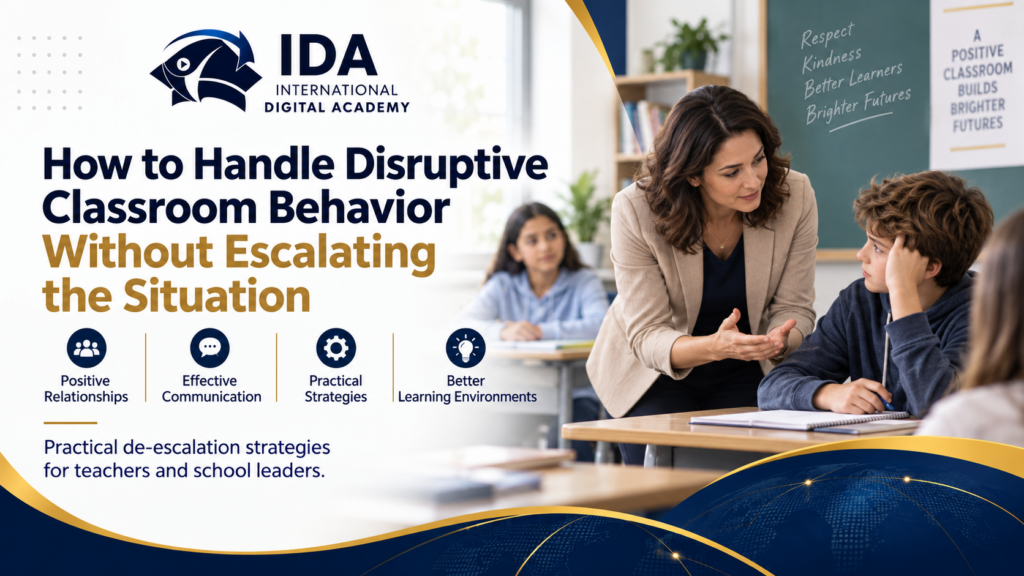
Disruptive classroom behavior is best handled by reducing escalation, protecting learning time, and responding consistently rather than reacting emotionally. First, start with a brief, calm correction; then restate the expected behavior and give the student a clear path back into learning. Meanwhile, reserve longer conversations for a private moment. When disruption is persistent, look beyond the incident and identify patterns, triggers, and support needs.
For teachers, the difficult part is rarely knowing that a behavior is inappropriate. The difficult part is deciding what to do in the next ten seconds without turning one student’s behavior into the whole class’s lesson.
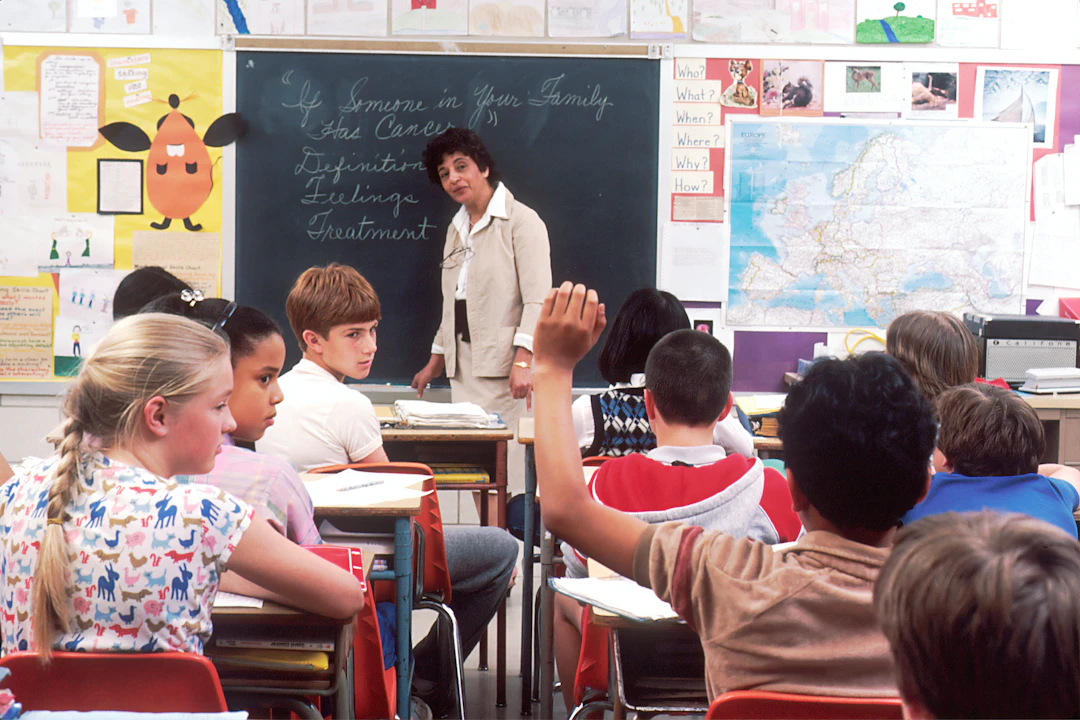
Why does disruptive behavior escalate so quickly?
A correction can become a confrontation when it is public, lengthy, emotionally charged, or unclear. For example, the teacher may be trying to restore order, while the student experiences the exchange as a challenge in front of peers. As a result, the rest of the class stops learning and starts watching.
Evidence reviews distinguish between universal classroom approaches and more targeted support for students with specific behavioral needs. The Education Endowment Foundation reports positive overall effects for behavior interventions while emphasizing that schools usually need an appropriate combination of universal and targeted approaches.
What should a teacher do in the first 30 seconds?
1. Lower the emotional temperature
Use a neutral voice and as few words as necessary. Avoid sarcasm, public argument, or a speech about the student’s attitude. Most importantly, your immediate goal is not to win a debate. Instead, make the next appropriate behavior easy to understand.
2. Name the expected behavior, not the student’s character
Compare a specific direction such as opening the notebook and beginning the first question with a judgment about the student’s personality. In contrast, the first describes an observable next step. The second, however, turns a behavior problem into an identity judgment and gives little information about how to recover.
3. Create a route back to learning
A correction should normally end with an achievable action: return to the seat, put the phone away, begin the first task, lower the voice, or move to the agreed workspace. Successful behavior management should restore participation, not merely stop misconduct.
4. Keep the audience small
If the student complies, move on. In other words, do not continue correcting after the behavior has changed. However, if a longer discussion is needed, hold it privately when possible and according to school policy.

Prevention is stronger than repeated correction
In practice, many classroom disruptions are easier to prevent than to repair. For instance, Institute of Education Sciences resources describe effective classroom management as including expectations that are explicitly explained, taught, and reinforced, along with routines established early and clearly structured lessons. As a result, management shifts from constant reaction to predictable classroom practice.
Teachers can make this concrete by teaching routines for entering the room, requesting help, moving between activities, using devices, participating in discussion, and finishing work. A routine is not established because it appeared once on a slide. Students need to see it, practise it, receive feedback, and encounter it consistently.
Use a simple response ladder instead of improvising
A response ladder helps teachers remain proportionate. The exact steps must fit the school’s behavior policy, but a classroom sequence might look like this:
- Non-verbal cue: proximity, eye contact, gesture, or pointing to the task.
- Brief reminder: restate the expected behavior without a lecture.
- Clear choice: identify acceptable options and what happens next under school policy.
- Private follow-up: discuss repeated behavior away from the peer audience.
- Document and escalate appropriately: when behavior is persistent, serious, unsafe, or beyond the teacher’s role.
The purpose is not to mechanically punish every step. It is to prevent a minor disruption from receiving the same response as a serious incident and to make adult behavior more predictable.
What if the same behavior keeps happening?
Importantly, repeated disruption is information. Therefore, instead of asking only what consequence to use, ask what pattern is visible. Does it happen during independent reading? At transitions? With tasks that are too difficult or insufficiently structured? After peer conflict? At a particular time of day?
For example, a simple observation log can record the context, the behavior, the teacher response, and what happened afterward. However, this is not a diagnosis. Instead, it replaces vague impressions with observable patterns that can inform classroom adjustments and conversations with colleagues or support staff.
When does a student need more than universal classroom management?
However, some students require targeted or specialist support. Evidence syntheses note that universal approaches can prevent disruption, while more intensive interventions may be appropriate for specific behavioral needs. Therefore, teachers should avoid interpreting persistent behavior as proof that they simply need to become stricter.
Escalate according to school procedures when there are safety concerns, serious aggression, persistent patterns despite consistent support, safeguarding concerns, or needs outside the teacher’s competence. Classroom management should never substitute for specialist assessment or appropriate pastoral, psychological, social, or medical support.
Common mistakes that make disruption harder to manage
- Correcting for too long. A brief issue becomes a prolonged confrontation.
- Using vague instructions. A specific action is more useful than a general demand to behave.
- Threatening consequences that will not be applied. Inconsistency weakens predictability.
- Correcting the person instead of the behavior. Labels do not teach an alternative behavior.
- Ignoring lesson design. Confusing transitions, long waits, or unclear tasks can create conditions for disruption.
- Handling every student identically. Consistency means fair, understandable principles, not pretending every student’s needs are identical.
A five-question check before your next lesson
- What behavior do students need in each phase of the lesson?
- Have I explicitly taught the routines I expect?
- What is my first low-key response to minor disruption?
- How will I give a student a quick route back into learning?
- Which situations require documentation, colleague support, or escalation under school policy?
Ultimately, good classroom management is not the absence of difficult moments. Instead, it is the ability to respond to them without allowing the response itself to become a second problem.
Frequently Asked Questions
Should teachers ignore minor disruptive behavior?
Not automatically. Some very minor behavior may stop without direct intervention, but repeated low-level disruption can reduce learning time. The response should be proportionate, brief, and consistent with classroom expectations and school policy.
Is being stricter the best way to stop disruption?
Not necessarily. Clear expectations and consistent follow-through matter, but escalation, humiliation, or unpredictable severity can make situations harder. Effective management combines prevention, explicit routines, proportionate responses, and targeted support when needed.
What should I do when a student refuses an instruction?
Keep the language short and specific. Restate the expected action, allow appropriate processing time, and follow the school’s agreed response procedure rather than entering a public argument.
Should I discuss behavior in front of the class?
Brief redirection may happen publicly, but extended discussions are usually better handled privately when possible. This protects learning time and reduces the peer audience around the conflict.
How can I tell whether the lesson itself is contributing to disruption?
Look for patterns around transitions, waiting time, unclear instructions, task difficulty, pacing, and opportunities to participate. If disruption repeatedly appears at the same lesson point, test a change in structure and observe the result.
When should behavior be referred to another professional?
Follow school procedures when behavior creates safety or safeguarding concerns, persists despite appropriate classroom support, or suggests needs beyond the teacher’s professional role. Referral can be the responsible next step.
Continue developing your classroom practice
International Digital Academy focuses on practical professional learning that helps educators turn educational knowledge into usable classroom practice. Explore how International Digital Academy approaches professional and applied learning.
Evidence consulted
This article draws on evidence summaries from the Education Endowment Foundation on behavior interventions and improving behavior in schools, and resources from the U.S. Institute of Education Sciences on classroom management and evidence-based behavior approaches.
Leave a Reply